Panasonic Aircond Timer Light Blinking: What It Means & How to Fix
Panasonic AC timer light blinking? Learn what the blinking patterns mean, common error codes, and how to troubleshoot or reset your Panasonic aircond.
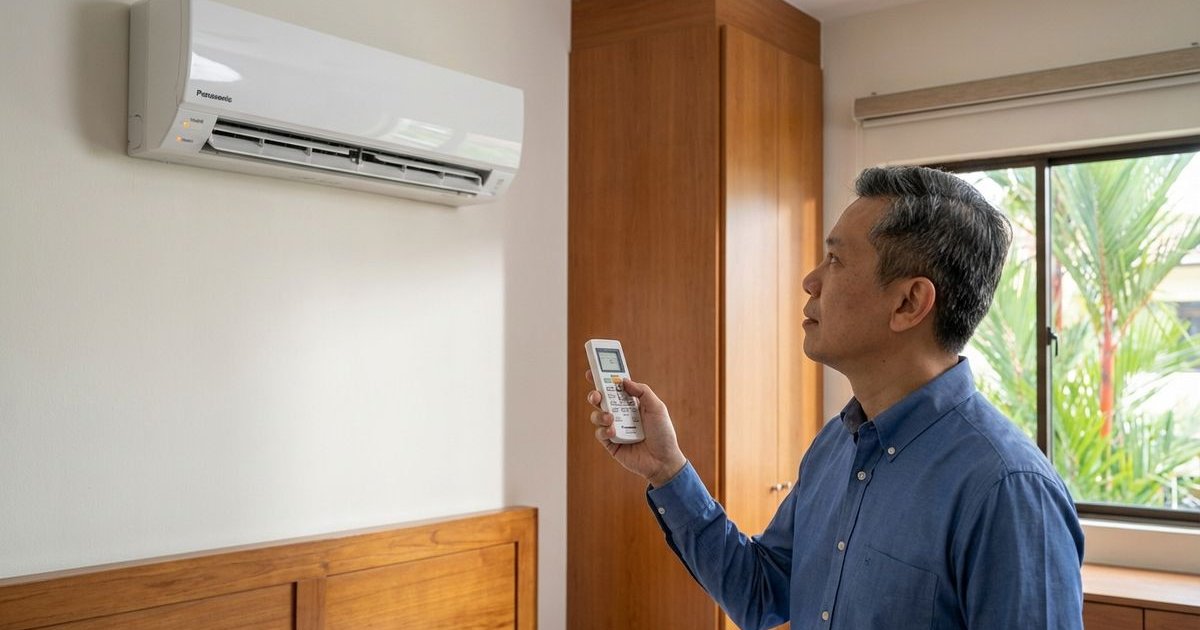
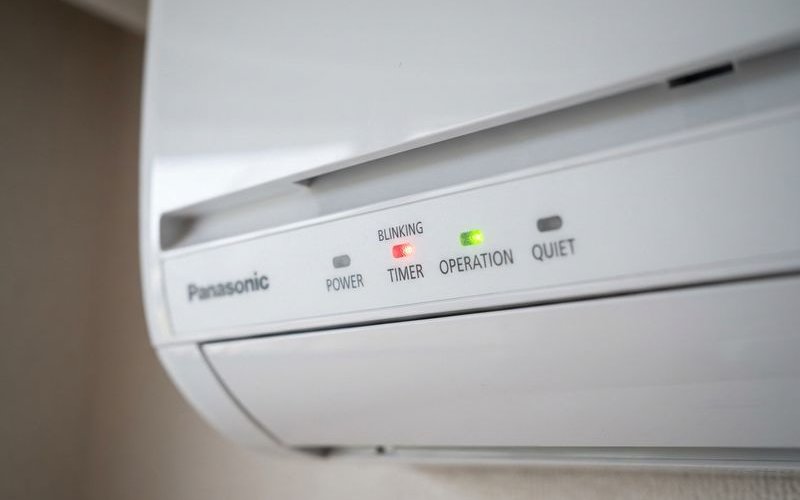
If your Panasonic air conditioner’s timer light is blinking, the unit has activated its self-diagnosis mode to prevent damage. We see this frequently in Puchong and Kuala Lumpur homes, often right when the afternoon heat hits its peak.
This signal is not random. The blinking light indicates a specific fault code that tells you exactly which component is failing.
Our team at AC Service Bro has diagnosed thousands of these units across the Klang Valley. From what we have seen, the problem usually stems from a few specific communication or sensor issues common in our tropical climate.
Let’s look at how to retrieve the hidden error code using your remote, decode what it means, and decide if you need a simple reset or a professional repair.
Retrieving the Error Code (Crucial First Step)
Most homeowners do not realize their remote control holds the answer. You cannot fix the issue effectively until you know the specific code.
Here is the exact method to find the error code on standard Panasonic Inverter remotes:
- Locate the Check Button: Look for a small hole or button marked “CHECK” on your remote control (often near the bottom or under the sliding cover).
- Activate Diagnosis Mode: Use a paperclip or a pin to press and hold this button for 5 seconds. The display will change to show a dash or “00”.
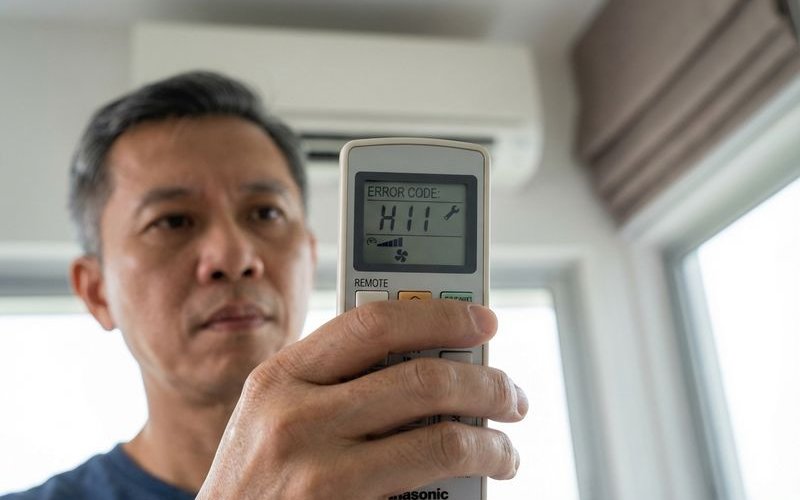
- Scan for the Error: Point the remote at the indoor unit and press the “TIMER” up or down arrow button. The screen will cycle through codes like H11, H12, H14, etc.
- Listen for the Beep: Keep pressing until the air conditioner emits a long, continuous beep (usually 4 seconds).
- Record the Code: The code on the screen when the beep sounds is your culprit.
Understanding Panasonic Blinking Patterns
Panasonic engineering uses these codes to protect expensive components like the compressor. The TIMER light serves as the primary alert system.
Quick Reference: Common Blink Patterns & Codes
| Error Code | Detection Meaning | Severity | Likely Fix |
|---|---|---|---|
| H11 | Indoor/outdoor communication failure | Medium | Fix wiring or replace PC board |
| H14 | Indoor air intake sensor fault | Low | Replace sensor |
| H19 | Indoor fan motor mechanism locked | Medium | Replace motor or clean obstruction |
| H23 | Indoor heat exchanger sensor 1 | Medium | Replace sensor |
| F90 | PFC control circuit protection | High | Inverter board/Compressor repair |
| F91 | Refrigerant cycle abnormality | High | Leak repair & gas top-up |
| F93 | Compressor rotation failure | Critical | Compressor replacement |
Most Common Errors Explained
We encounter three specific error codes more than any others in Malaysian households. Understanding these can save you time and money.
H11 - Communication Error (1 Blink Cycle)
The Technical Issue: The indoor unit and outdoor unit have stopped “talking” to each other.
Why It Happens:
- Power surges (common in areas with fluctuating voltage).
- Loose wiring connections on the terminal board.
- A blown fuse on the indoor printed circuit board (PCB).
Action Plan:
- Turn off the main isolator switch (the big white switch on your wall).
- Wait 15 minutes to let the capacitors discharge.
- Turn it back on.
The Reality: If the blinking returns immediately, the circuit board is likely damaged and requires replacement.
H19 - Indoor Fan Motor Lock (6 Blink Cycle)
The Technical Issue: The fan motor inside your room unit is trying to spin but cannot moving freely.
Why It Happens:
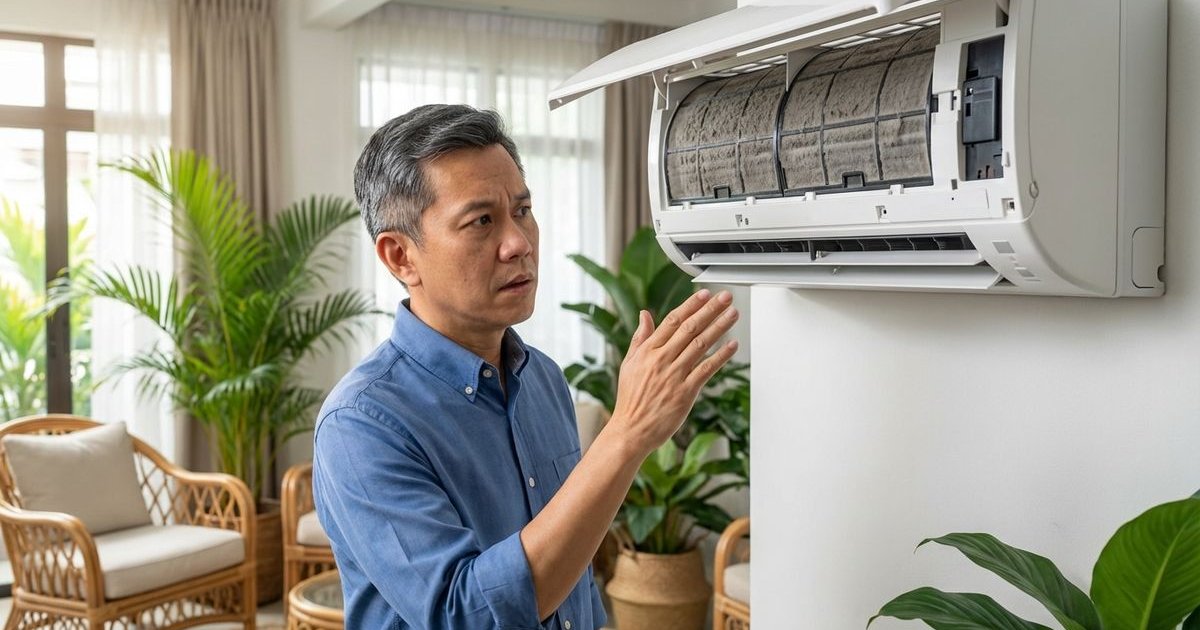
- Heavy dust or mold accumulation (the “jelly” buildup common in humid KL weather).
- The fan motor bearing has seized.
- The PCB is not sending the correct voltage to the fan.
Action Plan:
- Shine a torch into the air outlet.
- Look for thick grey dust or black mold on the roller fan.
- Use a long object (like a pen) to gently see if the fan spins freely when off.
The Reality: If it is stiff or gritty, you need a chemical overhaul or a motor replacement.
F90/F91 - Compressor & Gas Protection (7+ Blink Cycle)
The Technical Issue: The system has shut down the outdoor unit to prevent the compressor from burning out.
Why It Happens:
- Gas Leak: Low refrigerant levels cause the compressor to overheat.
- Blockage: The outdoor condenser is choked with dirt, preventing heat release.
- Voltage: A sudden spike damaged the outdoor inverter board.
Action Plan: Turn the unit off immediately. Running an AC with an F-series error code can destroy a compressor that costs RM1,000+ to replace.
How to Reset Your Panasonic Aircond
A “glitch” can sometimes trigger a false positive. We recommend performing a hard reset before calling for help.
Method 1: The Hard Power Cycle
- Switch off the air conditioner using the remote.
- Locate your home’s circuit breaker box or the dedicated wall isolator.
- Flip the switch to OFF and leave it for at least 20 minutes.
- Switch it back on and attempt to run the unit.
Method 2: The Error Log Clear
- Use the “Check” button method described earlier to enter diagnosis mode.
- Once in diagnosis mode, point the remote at the unit.
- Press and hold the “Auto Confirm” or “AC Reset” button on the indoor unit (under the cover) if accessible.
- Note that some newer models require a specific button combination found in your manual.
When to DIY vs. Call a Professional
Knowing when to stop is key to avoiding expensive mistakes. Modern inverter units contain sensitive electronics that do not react well to trial-and-error repairs.
Safe for DIY
- Cleaning Filters: Clogged filters can cause sensor errors. Wash them and dry them thoroughly.
- Visual Inspection: Checking if the outdoor unit fan is blocked by leaves or debris.
- Power Cycling: Flipping the breaker to reset the logic board.
Professional Required
- Electrical Work: Any issue involving the PCB, wiring, or capacitors (H11, H16).
- Refrigerant Issues: Leaks or gas top-ups (F90, F91, F93).
- Motor Replacement: Disassembling the indoor unit to change the fan motor (H19).
Safety Warning: Never attempt to open the outdoor unit panel yourself. The capacitors inside can hold a lethal electrical charge even after the power is turned off.
Preventing Future Errors
Our experience servicing units in Puchong shows that 70% of these errors are preventable with consistent care.
- Chemical Overhaul (Yearly): Malaysia’s humidity creates a biological slime in the unit. A chemical wash removes this, preventing fan motor stress (H19).
- Install a Starter/Isolator: Ensure your unit has a dedicated power point. Sharing power with other appliances leads to voltage drops that trigger communication errors (H11).
- Clear the Outdoor Unit: Ensure at least 2 feet of clearance around the back of the outdoor compressor for proper airflow.
Common Questions
Q: Can I keep using the AC if the light blinks but it still blows cold air? A: You should not continue usage. The blinking is a warning. Ignoring it usually leads to a total system shutdown within 48 hours, often with more extensive damage.
Q: How much does a typical repair cost in Kuala Lumpur? A: Prices vary by damage severity. A chemical overhaul costs between RM120 and RM180. Sensor replacements typically range from RM150 to RM250. Major inverter board repairs can cost RM350 to RM600 depending on the model.
Q: My remote doesn’t have a “Check” button. What do I do? A: Older non-inverter models may not have this feature. Try holding the “Timer” button for 10 seconds. If that fails, the blink pattern (counting the number of flashes) is your only guide.
We Service All Panasonic Models
We specialize in diagnosing and fixing these exact issues for homeowners across Puchong and KL. Our technicians carry the diagnostic tools necessary to read the specific voltage outputs and sensor data that simple observation misses.
If your timer light is blinking and the hard reset didn’t work, we can help you determine if it’s a minor sensor fix or a major component failure.
Diagnostic Visit: RM50 (This fee is waived if you proceed with the recommended repair).
Related Service
Learn more about our ac repair service