Aircond Gas Top-Up: Myths vs Truth - What You Need to Know
Separate fact from fiction about aircond gas top-up. Learn the truth about refrigerant, when you really need it, and how to avoid being scammed.
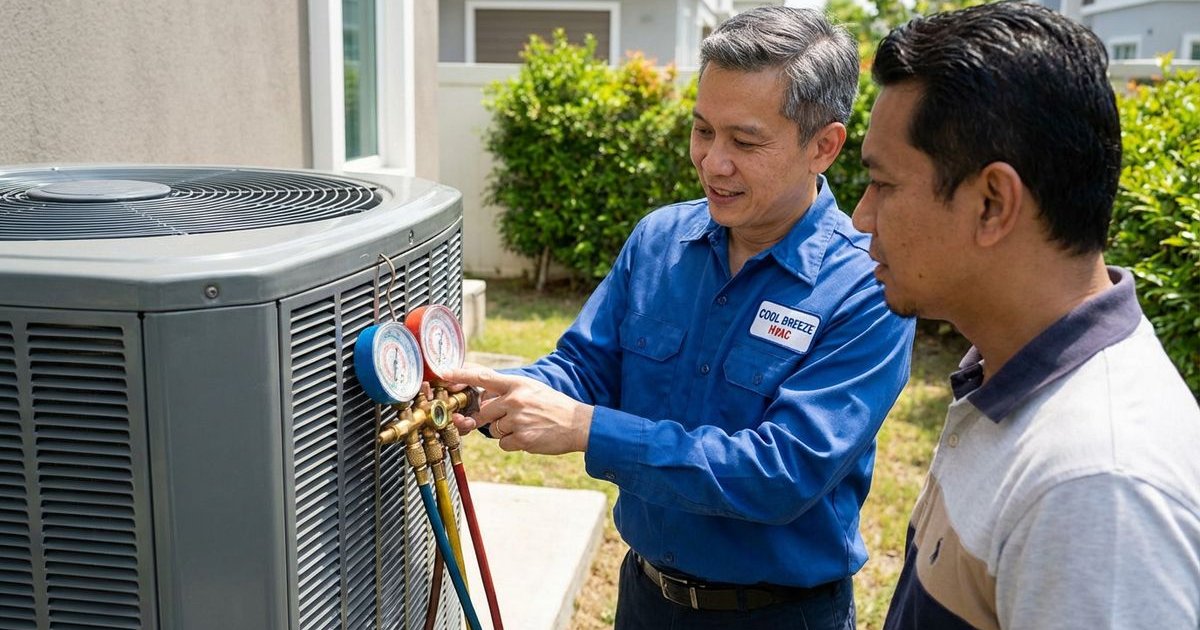
Some air conditioning technicians in Kuala Lumpur and Puchong will tell you a “gas top-up” is a routine part of servicing.
That claim is almost always false.
We have seen hundreds of homeowners pay for unnecessary refrigerant refills simply because they didn’t know how their system works. An air conditioner is a closed-loop system, similar to your refrigerator. It does not “consume” gas to create cooling.
This guide will explain exactly why your gas levels might drop, the specific regulations in Malaysia you need to know, and how to verify if a technician is telling the truth.
The Biggest Myth: “Gas Is Like Fuel”
MYTH: “Aircond gas needs regular top-up like car fuel.”
TRUTH: A properly sealed aircond system should NEVER lose gas. Refrigerant circulates continuously in a closed loop to absorb and release heat.
Think of refrigerant like the blood in your body. You don’t go to a doctor to “top up” your blood unless you have a wound.
If a technician says you are low on gas, there are only two possibilities. You either have a leak that requires repair, or you are being scammed.
Common Myths Debunked
Myth #1: “AC needs gas top-up every year”
Truth: Major manufacturers like Daikin and Panasonic design their units to run for 10 years or more without ever needing a refill. We frequently service 15-year-old units in Puchong that still run perfectly on their factory gas charge. If you need a refill annually, you have a leak that is being ignored.
Myth #2: “More gas = colder AC”
Truth: Overcharging is often more dangerous than undercharging. Adding too much gas increases the “head pressure” in the compressor. This causes the unit to overheat, trip the electric breaker, or even burn out the compressor entirely.
Myth #3: “All gas types are the same”
Truth: Mixing gases is a recipe for disaster.
- R22: The “old gas” operating at lower pressure (~60-70 PSI).
- R410A & R32: Modern refrigerants operating at much higher pressures (~120-150 PSI). Mixing R32 into an older R22 system can cause pipes to burst due to the pressure difference.
Myth #4: “You can add gas yourself”
Truth: Handling refrigerant is legally regulated in Malaysia under the Environmental Quality (Refrigerant Management) Regulations 2020. Technicians must possess a specific certification (CSTP) to handle these chemicals safely. Improper handling releases harmful gases that damage the ozone layer and can result in hefty fines.
Myth #5: “Gas gets ‘old’ and needs replacing”
Truth: Refrigerant is a stable chemical compound that does not degrade over time. It does not expire, spoil, or “lose its coldness” inside the copper pipes.
When You Actually Need Gas Top-Up
There are only a few legitimate scenarios where adding gas is necessary.
Valid reasons for a top-up:
- Confirmed Leak: You found oil stains on the pipe connections or flare nuts.
- New Installation: The pipe run is longer than standard (over 10-15ft), requiring additional charge.
- Major Repair: A part like the compressor or valve was replaced, requiring a system vacuum and refill.
Red flags that you’re being scammed:
- The technician suggests a “routine top-up” before even turning on the unit.
- No gauges were used to check the pressure.
- They cannot show you where the leak is.
- They offer a “RM 50 refill” promo (real gas costs significantly more).
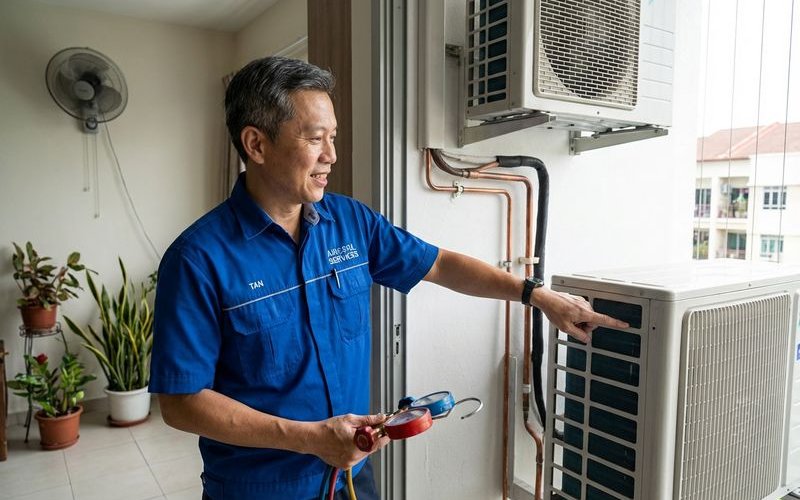
How to Tell If Your AC Really Needs Gas
Legitimate Symptoms
You can often spot a real issue before the technician arrives.
- Ice Formation: You see white frost building up on the copper pipes near the outdoor unit or on the indoor cooling coils.
- Hissing Sound: A distinct hiss near the pipe connections indicates active leaking.
- Warm Air: The unit blows air that is room temperature, not cooled.
The “Pressure Test” Verification
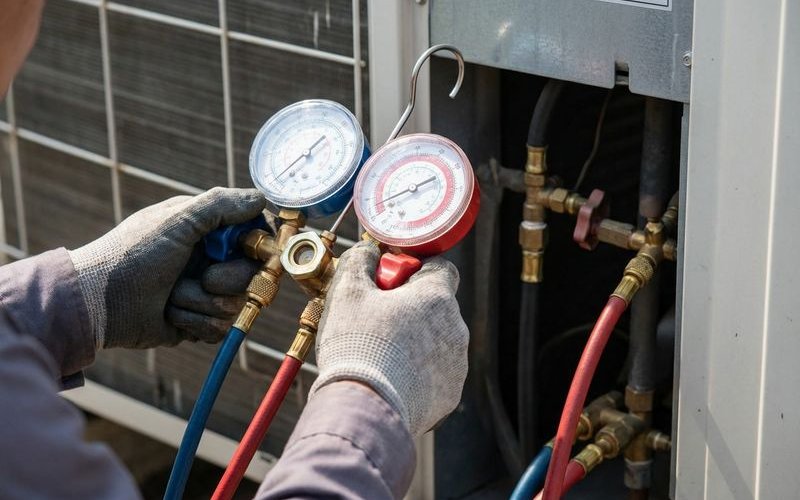
Don’t just take their word for it. Ask to see the pressure gauge reading.
Target PSI Readings (Malaysia Ambient Temp ~35°C):
- R32 Gas: Suction pressure should be 120 - 150 PSI.
- R410A Gas: Suction pressure should be 110 - 140 PSI.
- R22 Gas: Suction pressure should be 60 - 75 PSI.
If your R32 unit shows 125 PSI, and the technician says “it’s low,” they are lying.
Proper Diagnosis Steps
A professional must follow this sequence:
- Connect the manifold gauges.
- Check the suction line pressure while the compressor is running at full speed.
- Verify the “Delta T” (temperature difference) between air intake and output.
- Perform a bubble test with soapy water on connection points if pressure is truly low.
The Real Cost of Unnecessary Top-Ups (2026 Estimates)
Cheap “promotional” prices often hide the real cost of improper maintenance.
| Scenario | What Happens | Estimated Cost (MYR) |
|---|---|---|
| The “RM 50” Scam | You pay for gas you didn’t need; technician barely adds anything. | RM 80 - RM 150 (after hidden fees) |
| Top-Up Without Repair | Gas leaks out again within weeks. You pay repeatedly. | RM 300+ per year |
| Overcharging | Compressor overheats and fails. | RM 1,200 - RM 2,000 (Replacement) |
| Legitimate Refill (R32) | Full vacuum and recharge after fixing a leak. | RM 150 - RM 250 |
How to Protect Yourself
Before Any Gas Service:
- Ask for the Pressure Reading: Ask specifically, “What is the PSI reading right now?”
- Verify the Gas Type: Check the sticker on your outdoor unit. It will explicitly state R22, R410A, or R32.
- Demand a Leak Test: If the pressure is low, ask “Where is the leak?” A technician should be able to show you bubbles forming at a loose nut or joint.
- Check the “Bubble Test”: If they claim to have fixed a leak, ask them to apply soapy water to the joint again to prove no bubbles appear.
Questions to Ask:
- “Is my unit using R32 or R410A?”
- “Can you show me the gauge reading before you start?”
- “Did you check the flare nuts for leaks?”
- “Why did the gas level drop if the system is sealed?”
Our Honest Approach
We built AC Service Bro to counter the dishonesty we saw in the industry.
Here is how we handle refrigerant:
- Zero Upselling: We never recommend gas unless your system pressure is below manufacturer specifications.
- Visual Proof: Our technicians show you the gauge reading and the physical leak (if one exists) before doing any work.
- Leak Detection Included: Finding the source of the problem is part of our job, not an extra charge.
- Honest Pricing: We quote the full price for R32 or R410A refills upfront, with no hidden “labor fees.”
The Bottom Line
Remember these rules:
- Gas is not fuel; it should last the life of the unit.
- Frequent top-ups indicate a leak that must be fixed.
- R32 pressure should be around 120-130 PSI.
- Always ask for the pressure reading before agreeing to pay.
Need Honest Gas Service?
If your AC isn’t cooling and you want a technician who will diagnose the root cause instead of just selling you gas, we are here to help.
Related Service
Learn more about our gas topup service